Address
Pittsburgh, PA
Work Hours
Monday to Thursday: 9AM - 5PM ET
Friday: 9AM -1PM

Address
Pittsburgh, PA
Work Hours
Monday to Thursday: 9AM - 5PM ET
Friday: 9AM -1PM
“We don’t remember software for its features. We remember how it made us feel when we needed it to work. The best products don’t just look simple. They make people feel calm, capable, and understood.” 🥺
In my last field report, I wrote about narrow intent and what happened when I built a single-purpose app called What Would Mac Do? It was simple by design. One input. One response. One moment of reflection. No accounts. No feeds. No notifications. Just a small tool that helped people pause and think.
I expected a handful of clicks. What I did not expect was the response.
After sharing the link once, in one fan community, the app passed 500 visitors from 10 countries in two weeks. More importantly, I started receiving personal messages from people who said it genuinely helped them. Parents, students, creatives, people going through grief, people going through change. The feedback was human, not transactional.
That experience raised a new question for me.
Not “What features should I add next?”
But “What if I don’t add features at all?”
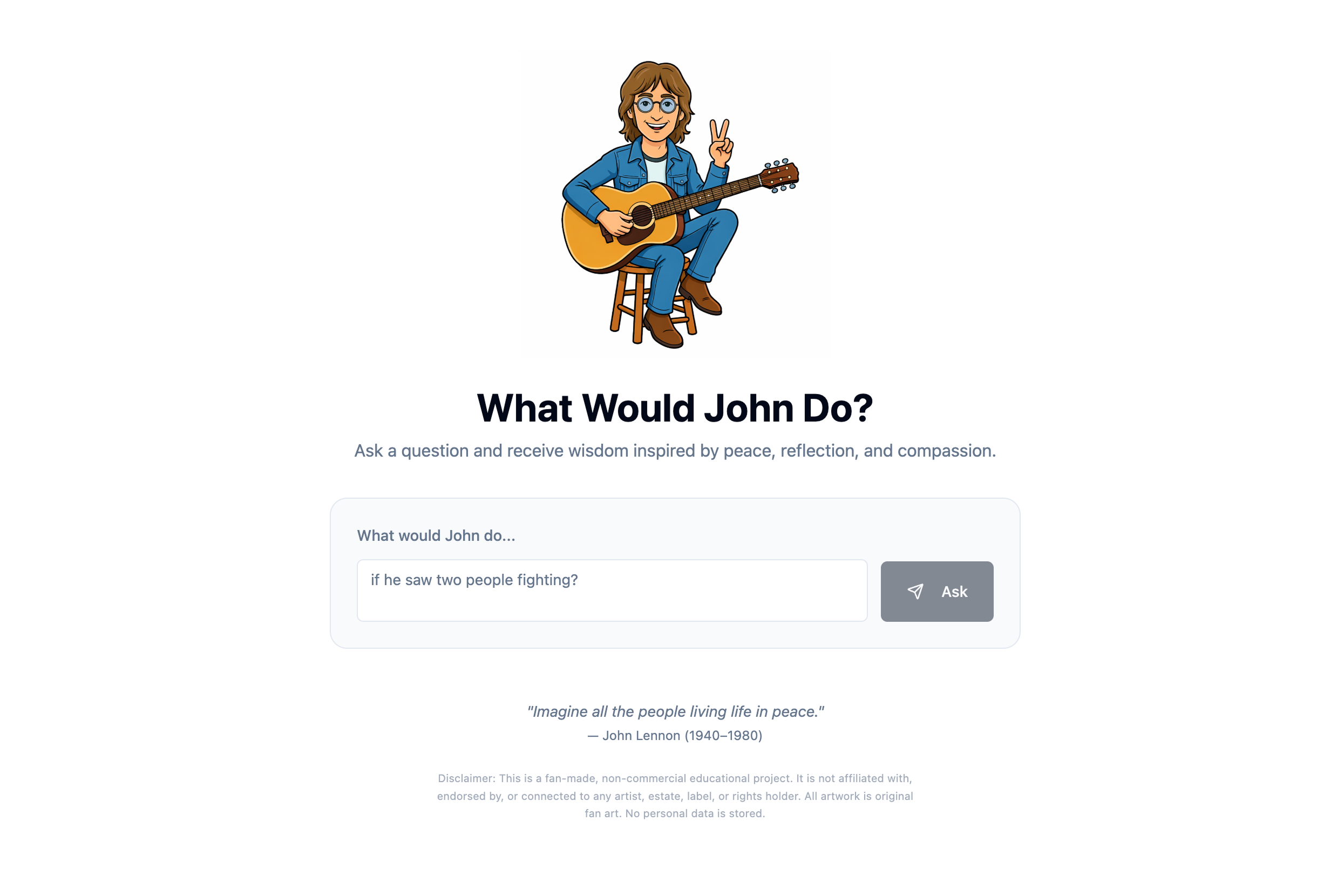
Caption: Check out the John Lennon app here, https://whatwouldjohndo.lovable.app/
Most products scale vertically.
More features. More integrations. More dashboards. More options. More everything.
Vertical scaling is natural. It feels like progress. You are building upward, stacking capabilities, trying to serve more use cases with the same product. Over time though, vertical scaling often creates friction. Interfaces become dense. Maintenance increases. Cognitive load grows. What began as a clear experience becomes a collection of compromises.
Narrow intent, by definition, resists that direction.
The strength of the original app was its restraint.
So instead of asking how to make the Mac app bigger, I asked a different question.

A new LinkedIn connection reached out after seeing the post. They mentioned a couple of their favorite artists and said something simple but powerful. What if this concept existed for other artists too? Not as a feature set, but as a tribute. A space for reflection. Something for people who felt connected to those voices the way Mac fans did.
Shoutout to Samantha for that spark. Brilliant idea!
The insight was not “add more to the app.”
The insight was “apply the pattern again.”
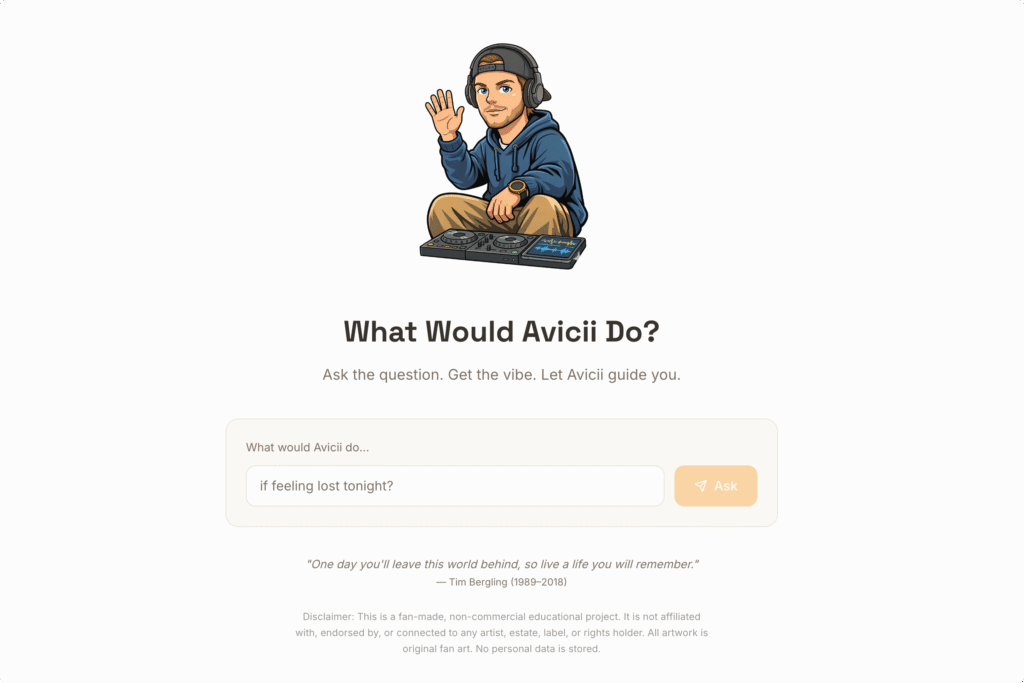
Caption: Check out the Avicii app here, https://whatwouldaviciido.lovable.app/
This is where the concept shifted from a product decision to a design philosophy.
I did not bolt on new functionality.
I replicated the same narrow experience for different communities.
Same structure.
Same simplicity.
Different voice.
The result was a series of small, focused apps inspired by artists who were not only known for their music, but for the wisdom and emotional presence they carried with their audiences.
I built versions inspired by:
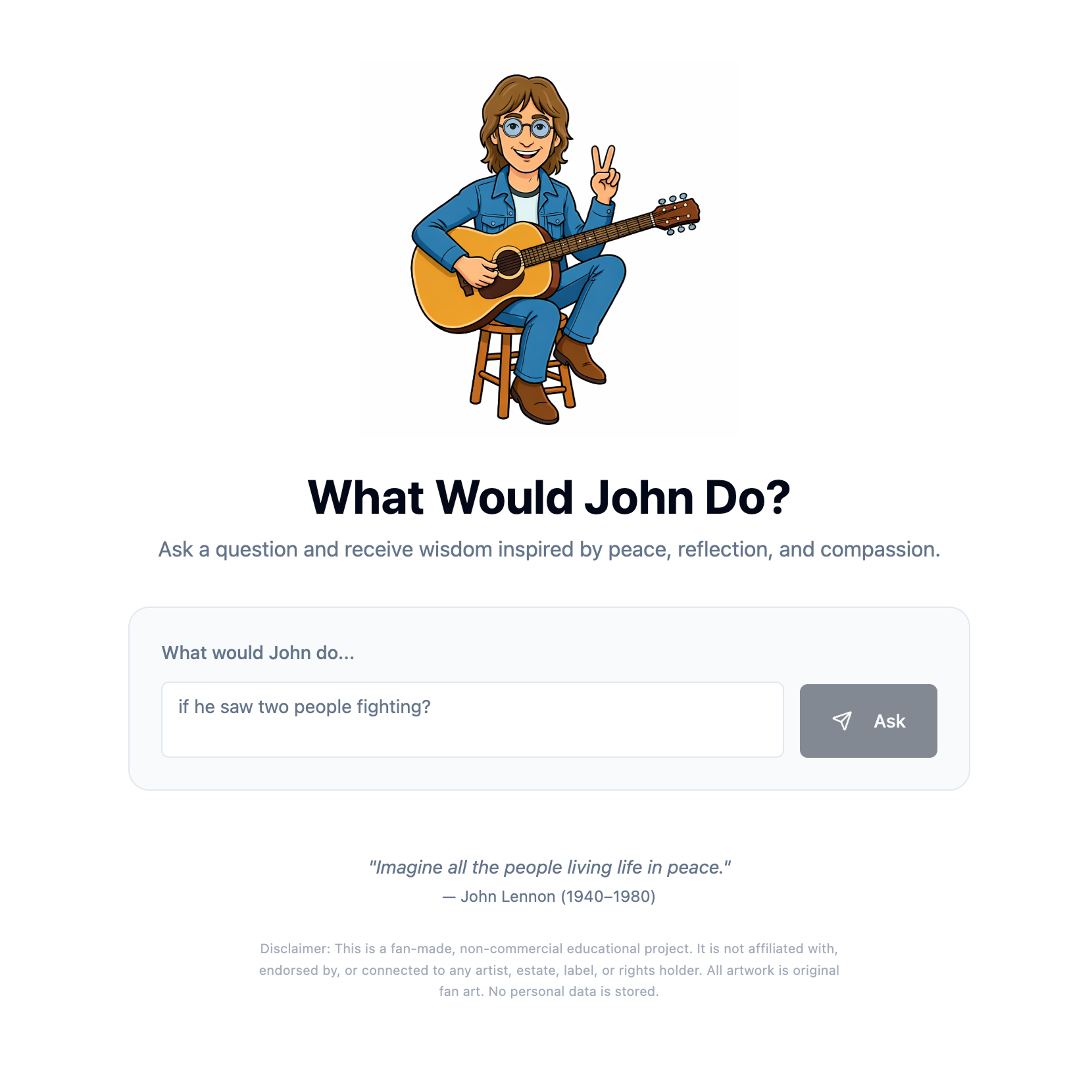
Each app followed the same narrow format. A piece of fan art at the top. A single text input. A reflective response. A clear button to ask again. No accounts. No friction. No feature creep.
The goal was not impersonation. The goal was tone. Presence. Encouragement. Reflection.
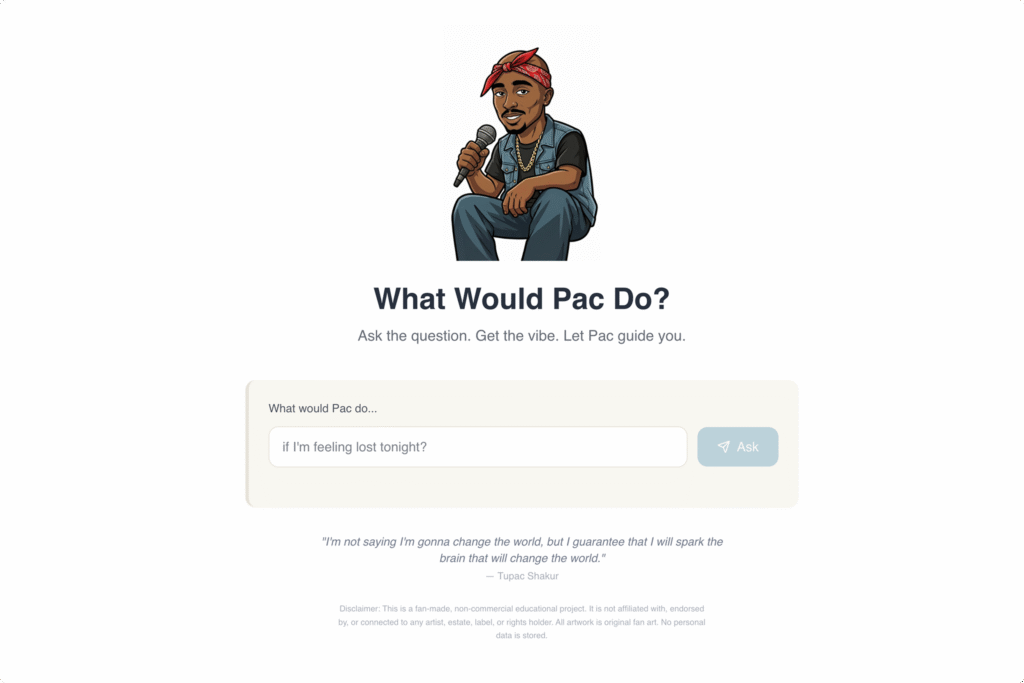
Caption: Check out the 2Pac app here, https://whatwouldpacdo.lovable.app/
There are a few reasons horizontal narrow intent feels powerful.
When the structure is small and clear, replication is easier than expansion. You are not rebuilding architecture. You are reusing a pattern that already proved meaningful.
Each artist community carries its own energy. The Mac audience responded to warmth and introspection. A 2Pac-inspired space leans toward strength and resilience. An Avicii-inspired space leans toward creativity and optimism. The framework stays constant, but the emotional lens shifts.
A vertical product demands increasing maintenance as features accumulate. A horizontal series of narrow tools spreads risk and reduces complexity. Each app stands alone. Each can evolve or remain static without breaking the others.
Users understand immediately what the app is for. There is no discovery curve. No onboarding required. The experience honors their time.
The promotion strategy also stayed narrow. I did not run ads. I did not create funnels. I did not attempt to blanket social media.
I posted a single link in a single relevant fan community and remained open to feedback. Positive and negative. The same approach that worked with the first app is being repeated for the others.
This keeps the experiment honest. The signal is not inflated by paid reach. The audience finds it because they care, not because it was pushed in front of them.
Traditional metrics still matter, but they are not the whole story here. Visits and countries are useful signals, but the strongest indicator has been the messages people choose to send privately. The stories they share. The gratitude they express. The moments they describe.
A narrow tool does not need millions of users to be meaningful.
It needs the right users at the right moment.
A few patterns are becoming clear.
Horizontal scaling allowed the idea to grow without diluting what made it work in the first place.
“Vertical scaling is natural. It feels like progress. You are building upward, stacking capabilities, trying to serve more use cases with the same product. Over time though, vertical scaling often creates friction.“
The next phase is observation. Post the new apps. Listen. Watch how different audiences interact. Notice what stays consistent and what shifts. Continue learning from real responses rather than assumptions.
There is also the question of who comes next. Artists and voices that carried meaning beyond entertainment. Names like Bob Dylan or Bob Marley come to mind, not as products, but as spaces for reflection and encouragement. Each new iteration raises ethical and creative considerations, and those are part of the study as well.
The point is not to flood the landscape with clones.
The point is to understand how far a simple, intentional pattern can travel without losing its integrity.
Scaling does not always mean building higher. Sometimes it means building wider with care. Instead of adding layers, you repeat what works and let each version stand on its own.
Narrow intent started as a single experiment.
Horizontal scaling turned it into a series of conversations.
Each one small.
Each one focused.
Each one built with the same question in mind.
What happens when you design for one meaningful moment, and then simply make room for more people to experience it?
“We have been taught to think in terms of scale first. This experiment flipped that. It optimized for meaning first. “