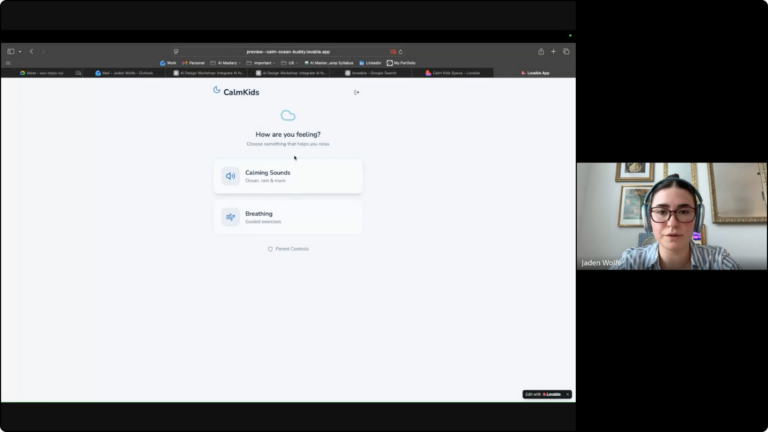
Let’s be honest: most product teams move way too slowly. Meetings drag on, concepts sit in Google Docs until they’re fossilized, and by the time something finally ships, the market’s already shifted. That’s where rapid prototyping comes in. Done right, you can go from fuzzy concept to clickable, user-tested MVP in five days flat.
At Big Nerd Design, we’ve actually done it—more than once. Here’s the breakdown of how we approach it, what tools we use, and why speed doesn’t have to mean sloppy.
Why Rapid Prototyping Matters
If you’ve been in product design for more than five minutes, you’ve probably seen this movie:
Endless “what if” conversations.
Dozens of static mockups nobody clicks on.
Developers waiting around for “final” specs.
Leadership asking why it’s taking six months to ship something basic.
Rapid prototyping flips the script. Instead of designing for perfection, you design for learning. You put something clickable in front of real humans fast, so you can validate whether you’re solving the right problem.
And the best part? With today’s AI-native tools, you don’t need a giant team or a six-figure budget to make it happen.
Use Gemini or ChatGPT to summarize stakeholder interviews into pain points.
Deliverables: Project PRFAQ, Situation-Target-Proposal, a clear problem statement, and measurable success metrics.
Day 2 – Prototype (and Test Internally)
Generate a build script based on your findings from Discovery
Spin-up a Lovable prototype with AI-generated copy, icons, and layouts.
Run a quick internal stakeholder test—pivot or persevere on ideas early.
Deliverable: a refined prototype ready for real users.
Day 3 – User Testing
Recruit from your panel or use UserBrain for remote tests.
Use AI to highlight friction points (“Where did users hesitate? What broke their flow?”).
Deliverable: prototype validated (or revised) based on user feedback.
Day 4 – Build
Feed validated flows into Lovable + Supabase for a fully-functional MVP.
Add acceptance criteria, QA prompts, and security checks automatically with AI.
Deliverable: a coded, testable feature that matches what users just validated.
Day 5 – Deploy
Push to production or staging.
Track early engagement against the success metrics you defined on Day 1.
Deliverable: working software in users’ hands—five days after kickoff.
Case Study: Orderly
We proved this process works with Orderly, a point of sales system that helps restaurants and bars operate more efficiently.
Timeline: 5 days
Budget: $5,000.00 USD (including labor and tools)
Outcome: A mobile and accessibility-compliant MVP with 16 core features
Instead of months of hand-wringing, we validated, built, and shipped a working product in less than a week. Read the full Litly case study here.
Lessons Learned
Don’t overbuild. Ship slices, not loaves.
AI is your sidekick, not your boss. It’ll churn out copy, docs, and wireframes, but you still need human judgment.
Feedback early, feedback often. Every extra day you wait to test is a day wasted.
Common Pitfalls (and How to Avoid Them)
Pitfall: Getting stuck in “one more iteration.” Fix: Cap yourself at one internal test and one user test per cycle.
Pitfall: Treating AI output as “final.” Fix: Use it as a draft—edit ruthlessly.
Pitfall: Waiting until the end for stakeholder buy-in. Fix: Get them clicking the prototype by Day 2.
Conclusion: Your 5-Day MVP Challenge
Markets move fast. Tech moves even faster. The teams that win aren’t the ones with the prettiest Figma boards—they’re the ones who validate fast, pivot fast, and deploy fast.
That’s what rapid prototyping unlocks. It cuts the waste, keeps the focus on users, and gets real products in real hands sooner.
👉 Ready to try it? Download our 5-Day MVP Playbook or contact us to talk about building your next MVP in 5 days.


 Bybignerd